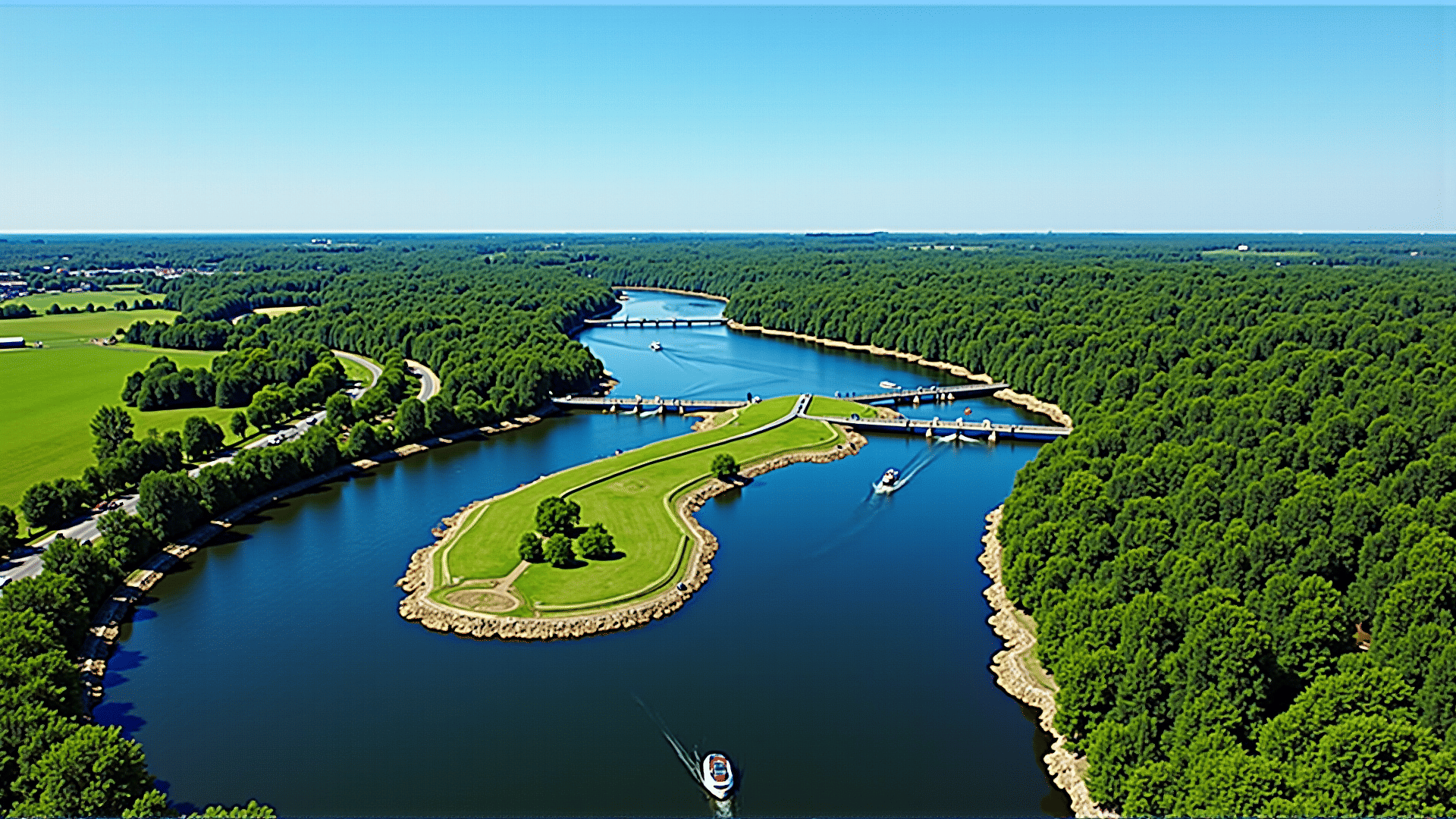
The Rideau Canal stands as a masterpiece of engineering and a symbol of human ingenuity. Stretching 202 kilometers from Ottawa to Kingston, this waterway weaves through placid rivers, serene lakes, and lush landscapes, embodying a perfect blend of functional design and aesthetic harmony with nature.
Constructed between 1826 and 1832 under the direction of Lieutenant Colonel John By of the British Royal Engineers, the canal was initially conceived as a strategic solution to safeguard a military supply route from potential American attacks after the War of 1812. This ambitious project had a profound impact on the region's development and is now recognized as a UNESCO World Heritage site.
What makes the Rideau Canal particularly remarkable is its construction without the modern technologies we rely on today. The canal's design involves a series of locks that expertly navigate the varied elevations between the Ottawa River and Lake Ontario. These locks, constructed with limestone and timber, are still operated by hand, maintaining the canal’s historical authenticity and charm.
Beyond its original military purposes, the canal has evolved into a beloved recreational destination. During the warmer months, its tranquil waters invite boating, kayaking, and fishing enthusiasts, while the surrounding trails are perfect for hiking and cycling. As winter casts its icy grip, a portion of the canal transforms into the world’s largest skating rink, attracting visitors from far and wide.
The merger of human innovation with the natural environment is beautifully illustrated in the landscape around the Rideau Canal. The construction of this waterway required not only technical prowess but also a respect for the existing environment. As such, it remains a haven for wildlife and a site of natural splendor, encouraging both conservation and appreciation.
In addition to its engineering acclaim, the canal is a cultural touchstone. It has inspired artists, writers, and musicians over the decades, becoming an integral part of Canada's heritage and national identity. Towns along its route, such as Merrickville and Smiths Falls, offer historical insights, complemented by the warm hospitality of the local communities.
In conclusion, the Rideau Canal is more than a historical artifact; it is a living testament to the vision and skill of its creators. Whether through its rich history, technical innovation, or natural beauty, the canal continues to captivate and connect us to an extraordinary past while serving modern-day adventurers and explorers.